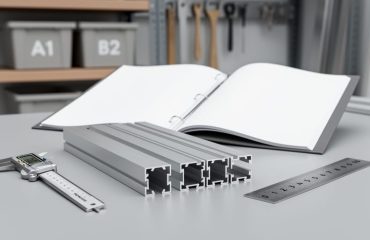
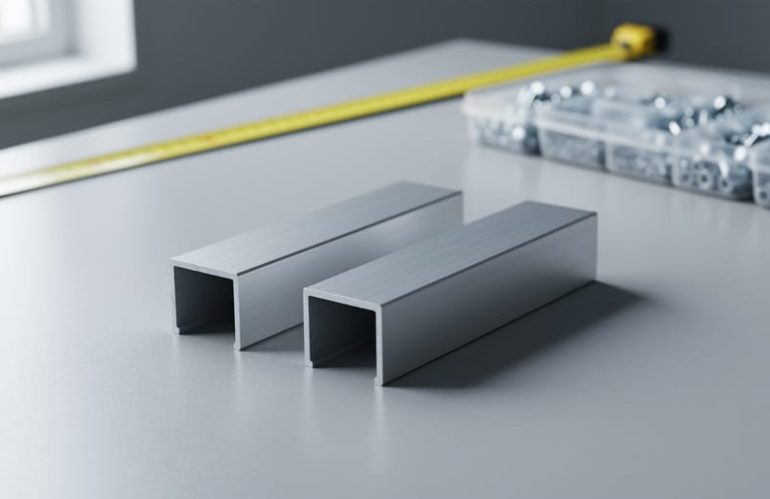
An L shape aluminum profile, also called an aluminum angle, is a two-leg extrusion that forms a 90-degree edge, and the right one comes down to three decisions: alloy, leg size, and temper and finish. Get those right and the profile will frame, brace, protect, or trim your project without surprises. Get them wrong and you’ll be re-ordering.
In the interest of transparency, we earn a commission on some purchases made through links on this site. As an Amazon Associate I earn from qualifying purchases.
Most L profiles are cut from 6063 or 6061 alloy. 6063 is the usual choice for architectural trim, edging, and decorative work because it extrudes cleanly and takes finishes well. 6061 is stronger and suits structural brackets, frames, and load-bearing supports. Leg dimensions and wall thickness then determine how much stiffness you get and how the piece seats against adjoining surfaces.
Aluminum also suits projects with a sustainability brief. It’s fully recyclable and holds its properties through repeated recycling, which matters when you’re documenting material choices for a building. Standard stock covers many jobs, but when a project needs non-standard leg lengths, special wall thicknesses, or a specific finish, customized extrusion is worth pricing early.
Below, we cover the factors that matter when buying, compare the main types, and review products such as the Blulu 2 Pcs Aluminum Angles Stock and the 2 PCS Aluminum Angle 6061 so you can match a profile to your specification.
What Defines an L Shape Aluminum Profile and Where Standard Stock Ends
An L shape aluminum profile, also sold as aluminum angle, is an extrusion whose cross-section forms two legs joined at a 90-degree corner. Each leg has a thickness, and the length runs along the extrusion. Listings usually state the size as leg by leg by thickness, followed by the length, so a 2″ x 2″ x 1/8″ angle in a 12″ length is a typical example.
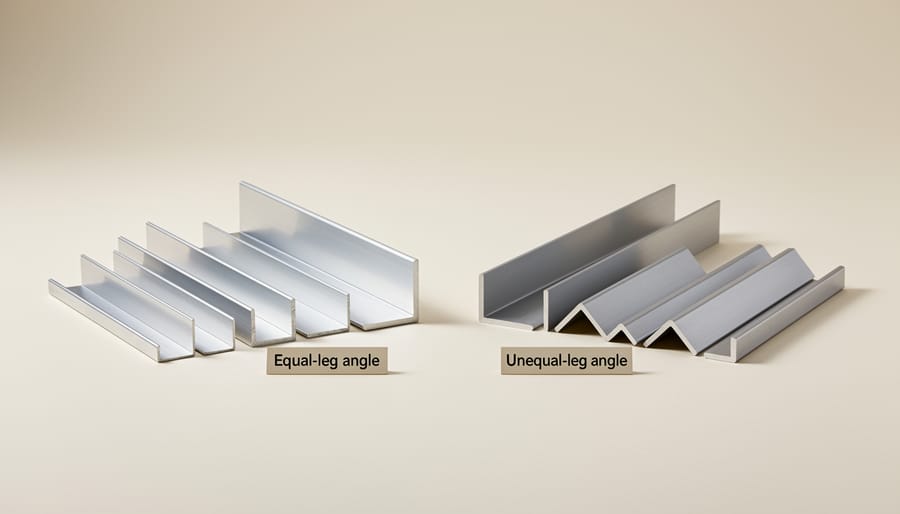
Legs can be equal or unequal. Equal-leg angle suits symmetrical corners, frames and edge trim. Unequal-leg angle works better when one face needs more bearing surface, such as a mounting flange or a ledge that supports a panel. Our standard profiles reference lays out common shapes and dimensions, so you can check what already exists before specifying anything new.
It also helps to separate the L from its relatives. A corner profile typically protects or finishes an edge. A U shape channel has two parallel legs and a base, which is why LED lighting channels often use it. A V shape channel is angled so a light or panel sits diagonally in the corner. These sometimes substitute for angle stock, but each solves a different problem.
The extrusion process is simple to picture. A heated aluminum billet is pushed through a shaped steel die, and the metal emerges as a continuous length with the die’s cross-section. It is then cut, heat-treated to a temper and often finished. The die defines the geometry, which is why a new shape is possible without changing the underlying material.
Standard stock stops being sufficient when your design needs a leg ratio, wall thickness or built-in groove that catalog angle doesn’t offer, or when you would otherwise machine, notch or weld stock to get there. Off-the-shelf angle is a good fit for prototyping and general fabrication. A custom extrusion usually makes more sense when the same part repeats across a building, an industrial assembly or a solar mounting system. That standard-versus-customized decision shapes the buying factors below.
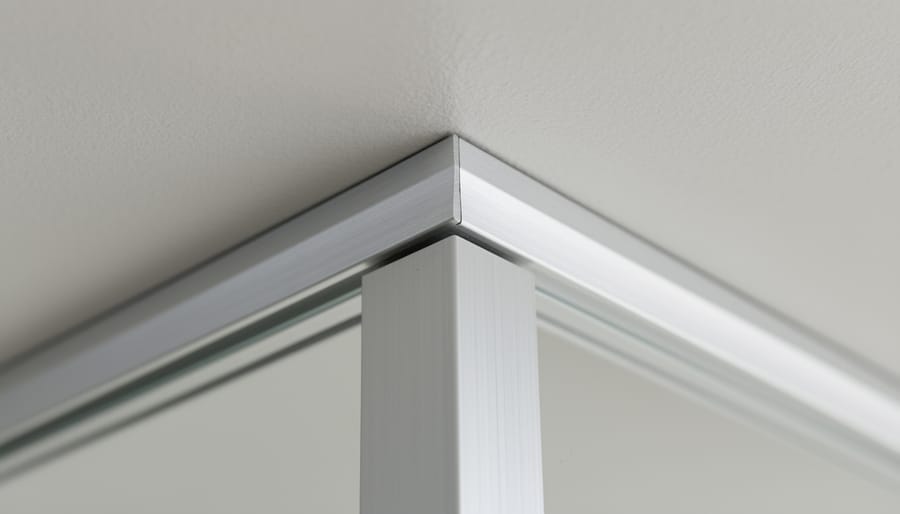
Key Buying Factors: Alloy, Dimensions, Temper and Finish
6061 vs. 6063 Alloy: Strength Versus Surface Quality
The two most common alloys for L shape aluminum profile are 6061 and 6063, and the choice comes down to a trade-off between structural strength and surface quality. 6061 is a heat-treatable alloy valued for strength and machinability. 6063 is the classic extrusion alloy, known for a smooth surface that takes anodizing well, which is why it dominates architectural trim and visible edging. For a deeper look at 6061 vs 6063 uses this overview is a useful companion.
| Alloy | Typical strengths | Typical applications | Finish suitability |
|---|---|---|---|
| 6061 | Higher strength, good machinability | Structural frames, brackets, supports, fabricated parts | Mill finish common; functional rather than decorative |
| 6063 | Good formability, smooth extruded surface | Trim, edging, window and door components, visible framing | Well suited to anodizing and decorative finishes |
This split shows up clearly in the reviewed listings. The CNQLIS 3″ x 3″ x 1/4″ angle and the Tlence 2″ x 2″ x 1/8″ angle use 6061, with Tlence listed in T5 temper with a mill finish. Those suit load-bearing or fabricated work. The Blulu angles (including the 48″ x 1″ x 1/8″ stock) and the four-piece 16″ x 2″ x 1/8″ set are 6063, which makes sense for frames, trim and edges where appearance counts.
In practice, pick 6061 when the angle carries load or will be drilled and machined heavily, and 6063 when the profile stays visible or will be anodized. If your project needs both, a custom extrusion lets you specify the alloy and finish together. Always confirm the exact temper and tolerances with the supplier rather than assuming them from the alloy name.
Dimensions, Thickness and Finish: Reading a Listing Correctly
Most angle listings follow a size-first convention: leg by leg by thickness, then length. A listing such as “2” x 2″ x 1/8″, 12″ length” describes two equal 2-inch legs, an 1/8-inch wall and a 12-inch piece. The first two numbers set the footprint, the third drives stiffness and weight, and the length determines how much cutting you’ll do later. Unequal-leg angles follow the same order, so read the first two figures separately rather than assuming they match.
Treat every figure as nominal until the supplier says otherwise. Extruded and mill-finished stock rarely measures exactly what the title states, and a wall listed as 1/8″ can come in slightly under or over. For a visible trim edge, that difference is cosmetic. For a press-fit joint, a bracket seat or a precision frame, it can decide whether parts fit. The research for this guide also found that listings rarely publish tolerances, so ask for them rather than assuming them.
Before you order, confirm these points with the seller or the manufacturer’s data sheet:
- Alloy, such as 6061 or 6063, matched to your strength or finish needs.
- Temper designation, for example T5 or T6.
- Both leg lengths, checked individually if the legs are unequal.
- Wall thickness, including the permitted variation.
- Stock length and whether cut-to-length is offered.
- Finish, whether mill, anodized or another treatment.
- Dimensional tolerance for legs, thickness and straightness.
- Protective packaging, so surfaces arrive without scratches or dents.
If a listing leaves any of these blank, request written confirmation. A supplier that can state tolerances up front usually controls its extrusion process well. For projects where stock sizes and tolerances fall short, a custom L profile lets you specify the dimensions directly.
Standard Angle Stock Versus Customized L Profiles: Types Compared
Off-the-shelf angle stock is the fastest route when your project fits common dimensions. Stock 6061 angle, such as the 2″ x 2″ x 1/8″ T5 mill finish pieces sold in 12″ lengths, favors strength and machinability, which suits brackets, supports and general fabrication. Stock 6063 angle, like the 48″ x 1″ x 1/8″ pieces, takes a cleaner surface, so it is the usual pick for visible trim and framing. Anodized angle adds a harder, more uniform finish on top of 6063 and works well where appearance and abrasion resistance both count.
Stock has limits, though. You get fixed leg ratios, fixed wall thicknesses and a short list of finishes. Anything beyond that means cutting, drilling, welding or accepting a compromise. A custom extrusion removes those workarounds by building the geometry into the profile itself.
| Option | Best use | Flexibility and finish | Planning considerations |
|---|---|---|---|
| Standard stock angle | DIY, prototyping, light framing and brackets | Common sizes only; typically mill finish | Secondary cutting and fabrication often needed |
| Anodized stock angle | Visible trim, edging and finished corners | Limited sizes; durable decorative surface | Confirm finish and tolerances with the supplier |
| Custom L extrusion | Window and door frames, solar brackets, architectural trim | Specified leg ratios, wall thickness, grooves and finishes | Requires a design brief and drawing approval |
Customization is where a project-specific profile earns its place. Unequal legs can match a substrate or glazing depth exactly. Wall thickness can be increased where loads concentrate and reduced where they do not, which saves material. Integrated grooves can carry gaskets, fasteners, wiring or sealant, and finishes can be specified to suit the exposure, whether mill, anodized or powder coated.
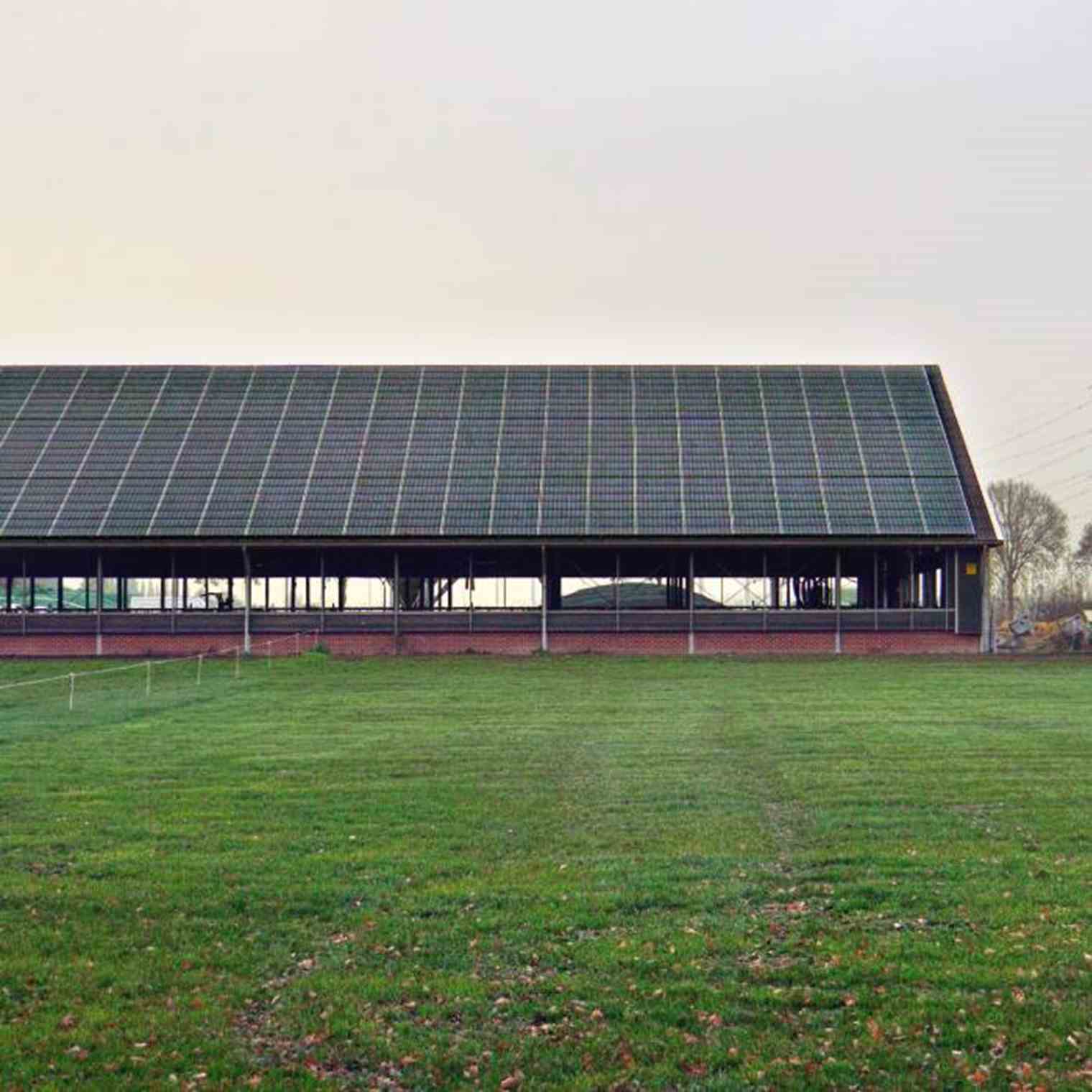
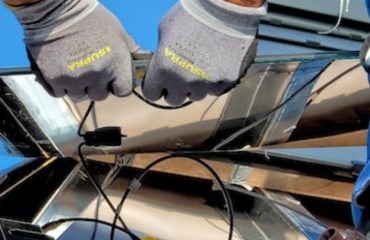
This flexibility matters most in window and door frames, architectural trim and solar hardware. A bracket profile designed around a particular rail or module frame removes loose parts and field adjustments. If you are weighing a solar mounting system a purpose-built L section can simplify the assembly, and it can make it easier for crews to install solar panels with fewer on-site modifications.
Our in-house team handles the process from design through delivery, so profile drawings, die development, extrusion, finishing and inspection stay under one roof. That continuity is one reason quality control matters so much for custom work: dimensional checks are tied directly to your drawing rather than to a generic catalog size.
Aluminum also supports sustainability goals. It is fully recyclable without losing its essential properties, and a profile engineered to use only the metal a load requires reduces scrap and embodied material. For projects that value environmental performance, that efficiency is often a deciding factor.
Recommendations: Eight Listings Reviewed by Use Case
2 PCS Aluminum Angle 6061 for Structural DIY and Light Building Work

This 2-piece set is built from 6061 aluminum, a heat-treatable alloy chosen for strength and machinability. Each piece is a true 90-degree extrusion, 2″ x 2″ in leg size and 1/4″ thick, supplied in a 12″ length in T5 temper with a mill finish. That means the surface is left unfinished, so it suits hidden or utilitarian work better than visible trim.
The 12″ length makes it handy for short brackets, corner braces, mounting supports and jigs. Because both legs are equal, it distributes loads evenly across each face, which keeps layout simple when you are fastening to two surfaces at right angles. The listing positions it for DIY projects and industrial or construction-style builds, and that is where it fits best: workshop fixtures, equipment frames and light structural reinforcement.
The 1/4″ thickness is the feature to weigh. For a shelf bracket or a machine guard, a thinner leg may be enough. If the angle will carry sustained load, resist racking, or take repeated drilling and tapping, the heavier leg gives you more material to work with and more resistance to bending.
Customer feedback is positive, with a 4.8 out of 5 rating from 54 customer ratings, and the set is listed as in stock. For production quantities or non-standard leg ratios, a custom extrusion is the better route.
Muzata 20Pack 6.6FT Silver LED Strip Channel for Lighting Installations

The Muzata 20Pack 6.6FT Silver LED Strip Channel is a different product from L angle stock, even though both are aluminum extrusions. Where an L profile is a 90-degree angle built to frame, brace or protect an edge, this is a U-shaped channel built to hold an LED strip. A milky diffuser sits over the strip to soften the light and hide individual diodes, so the channel and diffuser work as one lighting assembly. The listing is titled around a 6.6-foot length and a 20-pack, and it carries a customer rating of 4.4 out of 5 from 2,902 ratings. It is currently in stock.
So when is a channel the better pick? If your goal is structural support, trim or corner protection, stay with angle stock. If you are mounting strip lighting under cabinets, along shelving or inside architectural coves, a channel gives the strip a clean housing and a finished look. Where the light needs to wash across a surface from a corner, an angled LED profile (a V or L-style section) can be the more suitable form.
Check the listing for exactly what ships with the channel before you order, and don’t assume extra accessories beyond the diffuser.
4 FT Anodized Aluminum Angle in 6063 Alloy for Finished Edges

This 4 ft length of 1″ x 1/16″ angle is a different animal from structural stock. The 1/16″ thickness makes it a light, finish-driven piece, so the anodized surface is the main reason to buy it. It’s offered in 6063 alloy at T-6 temper, the alloy typically chosen when appearance matters more than load capacity. Anodizing adds a hard, uniform surface layer that resists scuffing and keeps its look better than bare mill finish, which is why this style of angle shows up on cabinet edges, trim, display work and visible corner protection.
Treat it as a cover and edge profile, not a bracing member. At that thickness it won’t carry meaningful load, so don’t specify it where an angle has to resist bending or hold weight. If you need strength, the heavier 6061 options covered earlier are the better fit.
The 4 ft length is easy to handle and transport, and it cuts cleanly to size with a fine-tooth blade. Remember that cut ends are bare aluminum, so plan on finishing or concealing them where the edge will be visible.
Customer feedback is positive, with a rating of 4.7 out of 5 from 6 customer ratings. That’s a very small sample, so read it as a good early signal rather than a proven track record. The listing shows it as in stock.
4PCS 4 x 4 x 1/2 Aluminum Plate as a Companion to Angle Stock

This 4-piece set is worth understanding precisely because it is not an L profile. It is flat 6061 plate, listed at 4 x 4 inches and 1/2 inch (0.47″) thick, covered in protective film, finely polished and deburred. Customers have rated it 4.4 out of 5 from 49 ratings, and it is currently in stock.
Where it earns a place in an angle-based project is as a companion material. Angle stock gives you a rigid 90-degree edge, but plate supplies the flat, thick bearing surface that many assemblies still need. Base plates that spread a load across a mounting surface are the obvious case. Gussets that stiffen a corner joint and brackets cut or drilled from solid stock are others. Because it is 6061, the same alloy found on several angle listings in this guide, the plate and angle behave consistently when fabricated and joined.
Check the protective film before ordering for visible work, since it helps preserve the polished face through handling. Confirm tolerances on thickness and flatness with the supplier rather than assuming the listed dimensions are exact. Where a project needs the bent geometry of an L, specify angle or a custom extrusion instead, and use plate only for the flat pieces around it.
6 FT Aluminum Angle for Longer Runs and Framing

A 6 ft aluminum angle suits the jobs where a 12″ or 48″ piece falls short: long frame members, exposed edges, and shelving supports that need to run the full width of a wall or bench. Fewer joints mean cleaner lines and less splicing. This option is rated 4.8 out of 5 from 50 ratings and is listed as in stock.
Length brings practical trade-offs, though. A 6 ft piece is awkward to carry and ship, and a bumped end can leave a bent leg before you’ve made a single cut, so check it on arrival. Sight down the length against a flat surface to catch any bow or twist, because that is far easier to fix before fabrication than after. Plan your cuts, too. Mark and cut with a fine-tooth blade, and support the full length so the angle doesn’t flex mid-cut.
Leg size and thickness aren’t confirmed for this listing here, so verify both with the supplier before you order. If you routinely need longer runs, that is also a good moment to consider a custom extrusion cut to your exact length.
5PCS 6061 Aluminum Sheet Metal 1/4″ x 4″ x 4″ for Brackets and Mounting Plates

These five 6061 plates measure 1/4″ x 4″ x 4″ and ship with a protective film over the surface. That film is a practical detail: it keeps the faces clean through cutting, drilling and handling, so you peel it only when the part is ready to install or finish. The listing describes them as heat-treatable aluminum flat stock, which suits fabricators who plan to machine or temper the material further.
These are plates, not L profiles, and that is the point. Angle stock gives you the 90-degree leg, while a flat plate gives you the mounting face. Cut a plate into base pads, gussets or small brackets, then fasten it to an angle section to spread load across a wider footprint. A 1/4″ thickness gives you enough material to tap or countersink without much concern about the plate deforming.
Customer feedback is strong: 4.7 out of 5 from 465 ratings, and the listing is in stock. Treat that as a reference point for general satisfaction rather than a guarantee of tolerance, so confirm flatness and exact dimensions with the supplier if your assembly depends on tight fits.
3PCS 1 Inch Solid Round Aluminum Rod for Machined Fittings

This listing is a different animal from angle stock. The 3PCS 1 Inch Solid Round Aluminum Rod is 6061 round bar, 13 inches long, sold for industrial work, DIY crafts and lathe use. It will never serve as an L profile, so don’t buy it to frame a corner or edge a panel. Its job is machined parts: spacers, pins, bushings, standoffs and turned fittings.
Where it earns a place in an angle-based project is the assembly. Turned pins can pivot a hinged bracket, spacers can hold an L angle off a wall, and cut rod sections can act as stops or fasteners’ mating pieces. Because both the rod and many angle listings use 6061, pairing them keeps the metal consistent, which helps avoid mismatched finishes and corrosion concerns when parts touch.
The listing carries a 4.8 out of 5 customer rating from 53 ratings and shows as in stock. The verified listing data doesn’t give tolerances for the rod’s diameter or straightness, so confirm those with the seller if a precision fit matters. For anything structural or load-bearing, size the angle first and treat the rod as a supporting component.
Blulu 2 Pcs Aluminum Angles Stock for Longer 1-Inch Framing and Edging

The Blulu 2 Pcs Aluminum Angles Stock is a 48″ x 1″ x 1/8″ angle, and that combination of length and leg size makes it a practical pick for frames, trim and light supports. At four feet, it covers a long edge or a full frame side in a single piece, so you need fewer joints and less cutting than you would with shorter stock. The 1-inch legs suit edging, shelf supports and corner protection where a larger section would look bulky.
Customers rate it 4.6 out of 5 from 35 ratings, and it is listed as in stock. That is a smaller review base than some other listings, so treat the score as a useful signal rather than a verdict.
The 1/8-inch wall suits light-duty work. If a project involves heavier loads or spans, step up to a thicker section. Because the pieces are long, check for straightness on arrival and plan how you will cut and transport them. Confirm the exact tolerances with the seller before you order, since nominal and actual dimensions can differ slightly.
Key Details at a Glance: Verified Listing Specifications
Before relying on any listing for a specification, it helps to separate what the product pages state from what still needs checking. The table below consolidates the attributes confirmed for the reviewed items. Where a column is blank in the source material, it is simply left out here rather than guessed.
| Product | Form and verified details | Rating | Availability |
|---|---|---|---|
| 2 PCS Aluminum Angle | Angle, 6061 alloy, 2″ x 2″ x 1/4″, 12″ length, T5 temper | 4.8 (54 ratings) | In stock |
| 4 FT Anodized Angle | Angle, 6063 alloy, 1″ x 1/16″, 4 ft, T-6 temper | 4.7 (6 ratings) | In stock |
| Blulu 2 Pcs Angles | Angle, 48″ x 1″ x 1/8″ | 4.6 (35 ratings) | In stock |
| Muzata LED Channel | U-shaped channel, 6.6 ft, silver, milky diffuser | 4.4 (2,902 ratings) | In stock |
| 4PCS Aluminum Plate | Plate, 6061 alloy, 4″ x 4″ x 1/2″ | 4.4 (49 ratings) | In stock |
| 5PCS Aluminum Sheet | Plate, 6061 alloy, 1/4″ x 4″ x 4″ | 4.7 (465 ratings) | In stock |
Two further listings complete the roster. The 6 ft aluminum angle is rated 4.8 from 50 ratings and the 1 inch solid round rod, in 6061, is rated 4.8 from 53 ratings. Both are in stock.
Treat a few points with caution. The 4 ft anodized angle has only six ratings, so its score is a thin signal. Ratings reflect customer feedback on each listing, not independent testing, and they say little about dimensional accuracy.
Anything beyond this table should be considered unconfirmed until the supplier states it in writing. That includes dimensional tolerances, the difference between nominal and actual sizes, current availability and pricing. Stock status and prices change often, so request a written quotation and a tolerance statement before committing to a purchase, particularly for architectural or load-bearing work.
Common Mistakes to Avoid When Specifying L Shape Aluminum
The most frequent specification error is choosing alloy by price alone. A 6061 angle and a 6063 angle can look identical on a listing, yet 6061 is generally chosen where strength and machinability matter, while 6063 suits visible, finished work. Buying the cheaper option without matching it to the job invites rework later.
A second mistake is confusing related products with angle. Flat plate, solid round rod and U-shaped LED channel all appear in the same search results, but none replaces an L profile in a frame, edge or bracket. Plate and rod are companions to angle, not substitutes.
Temper and finish are often ignored. A T5 or T6 designation signals how the material was heat treated, and a mill finish behaves differently from anodized stock when it is exposed to weather or handled on site.
Nominal sizes are another trap. A “2 x 2 x 1/8” description is a label, and actual leg length and thickness can differ slightly, so confirm dimensions before cutting or ordering in volume.
Corrosion exposure and standards compliance also get overlooked. Coastal, humid or chemically active environments call for the right alloy and finish, and routine preventive aluminum care extends service life once the material is installed.
Finally, many buyers keep ordering stock when a custom extrusion would cut fabrication time and offcuts. A profile with the exact leg ratio, wall thickness and integrated grooves reduces waste, which also supports material efficiency. Aluminum is highly recyclable, so planning for minimal scrap and end-of-life recovery is part of specifying responsibly.
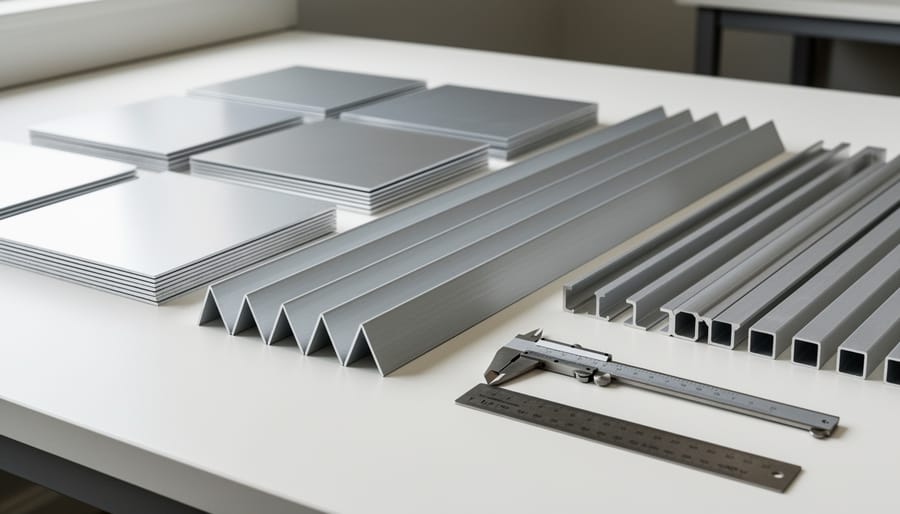
L Shape Aluminum Profile FAQs
Choosing the right aluminum angle is easier once the common questions are answered plainly. These are the ones buyers ask most often.
What is the difference between 6061 and 6063 aluminum angle?
6061 is the stronger, more machinable alloy, which suits structural DIY, brackets and load-bearing work. 6063 offers better surface quality and takes anodizing well, so it is the usual pick for trim, edging and visible architectural applications.
What do T5 and T6 mean on an angle listing?
These are temper designations that describe how the alloy has been heat treated after extrusion. T6 generally indicates a solution heat-treated and artificially aged condition, while T5 is cooled from extrusion and then aged. Confirm the temper with the supplier if strength matters for your design.
Should I choose equal or unequal leg angle?
Equal legs, such as a 2″ x 2″ angle, suit general framing and corner protection. Unequal legs make sense when one face needs more bearing or mounting surface than the other.
When is a custom extrusion worth considering?
Custom L profiles pay off when standard stock forces extra cutting, machining or waste, or when you need specific leg ratios, wall thickness, integrated grooves or finishes. Window and door frames, solar mounting brackets and architectural trim are typical cases.
Can aluminum angle be anodized?
Yes, and 6063 is the alloy most often chosen for it because it produces a consistent, attractive finish. Anodizing also improves corrosion resistance, which helps in exposed or outdoor installations.
How does aluminum angle support sustainable construction?
Aluminum is highly recyclable, and extruding to the exact profile you need reduces fabrication scrap. Pairing recycled-content material with right-sized custom profiles supports lower material waste over a project’s life.
If your requirements fall outside standard stock sizes, it is usually better to raise that early, before fabrication costs and offcuts start to accumulate.
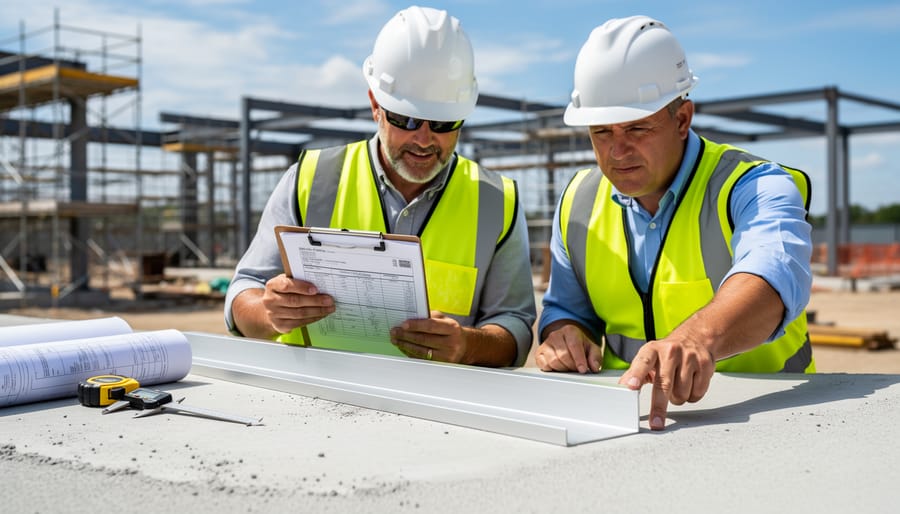
Choosing the right L shape aluminum profile comes down to a handful of decisions made in order: alloy first, then leg size and thickness, temper, and finish. From there, you decide whether standard angle stock will do the job or whether the project calls for something purpose-built. Off-the-shelf angle works well for DIY builds, prototypes and light framing. Architectural, industrial and solar applications usually benefit from customized extrusions, where leg ratios, wall thickness, integrated grooves and finishes are specified to fit the design instead of forcing the design to fit the stock.
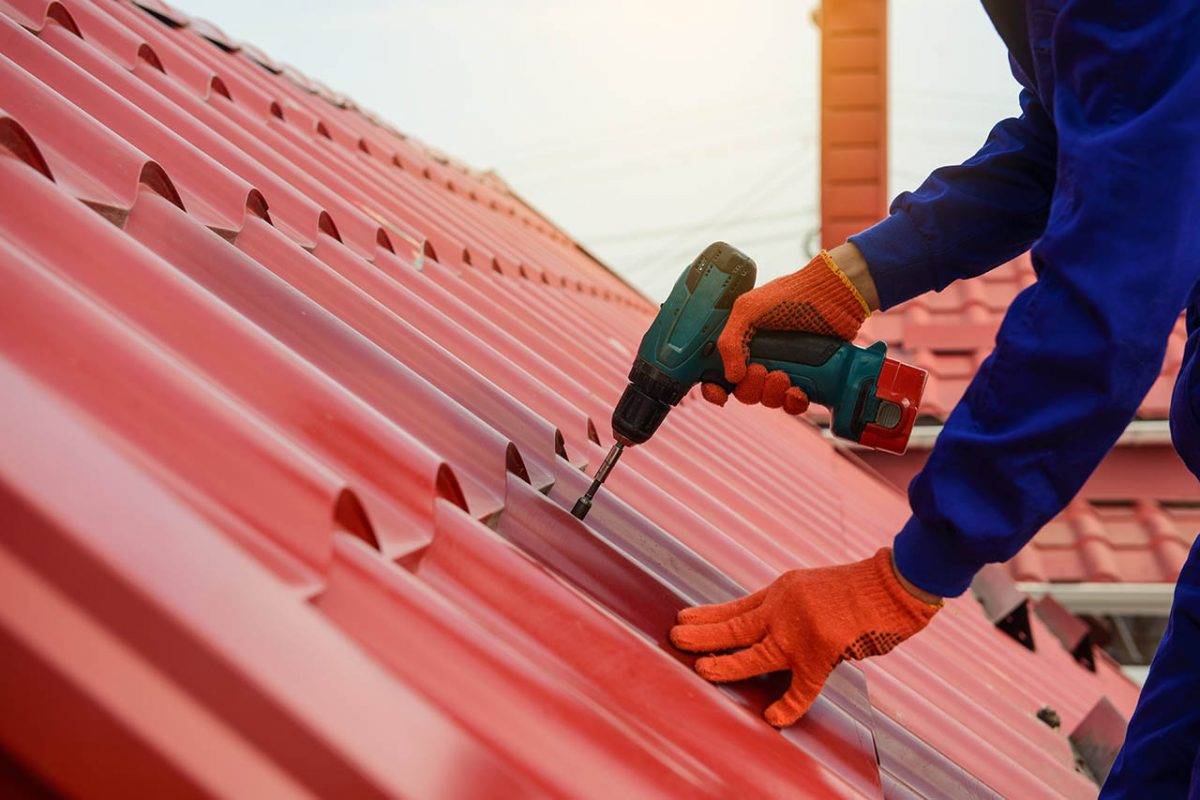
That is where a design-to-delivery partner earns its place. A custom L profile can cut fabrication steps, reduce offcuts and give you tighter control over fit and appearance. Aluminum is also fully recyclable, so material efficiency and sustainability can be built into the specification rather than treated as an afterthought. If your project also involves roofing, it helps to understand the available metal roofing types alongside your profile choices.
If you are weighing standard stock against a custom extrusion, talk to Long Metal Solar Roofing’s in-house design-to-delivery team. Share your requirements, and they can help you turn them into a profile that fits your project.