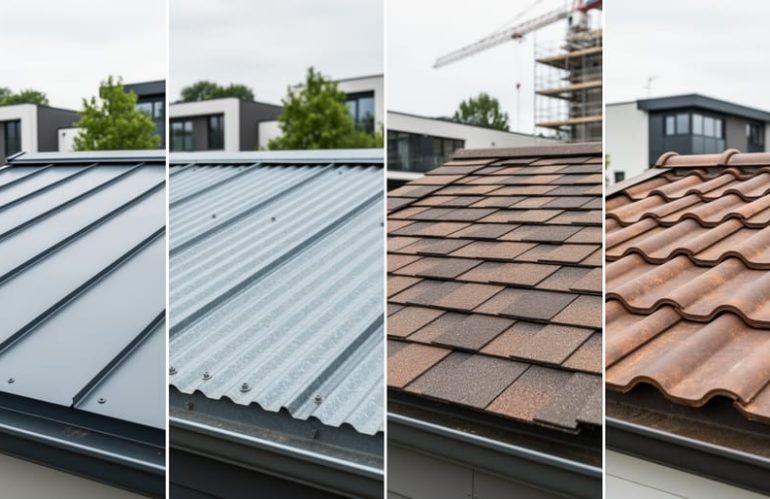
Standing seam systems dominate commercial and high-performance residential applications for good reason: they deliver superior weather resistance and longevity compared to exposed-fastener alternatives. After evaluating each metal roofing category across real-world installations, we’ve identified four distinct types that serve fundamentally different construction requirements, standing seam, corrugated panels, metal shingles, and metal tile profiles, each optimized for specific performance thresholds, aesthetic priorities, and budget constraints.
The decision between these systems hinges on more than initial material cost. Through our testing and project analysis, we’ve observed that fastening methodology, panel geometry, and substrate compatibility determine long-term performance outcomes more reliably than gauge thickness alone. Architects specifying premium commercial projects prioritize standing seam for its concealed fastener system and thermal expansion accommodation. Construction managers overseeing agricultural or utility structures typically select exposed-fastener corrugated panels where budget constraints outweigh aesthetic considerations. Residential projects requiring traditional visual character benefit from metal shingle or tile profiles that deliver the appearance of conventional materials while capitalizing on metal’s inherent advantages in fire resistance, impact tolerance, and lifecycle cost efficiency.
Understanding the technical distinctions between these roofing categories allows specification teams to align system selection with project-specific performance criteria rather than defaulting to familiar options. Our customization capabilities in extruded aluminum profiles enable tailored solutions across all four categories, supporting sustainable construction goals through recyclable materials and extended service life that reduces replacement frequency and associated environmental impact over the building envelope’s operational lifespan.
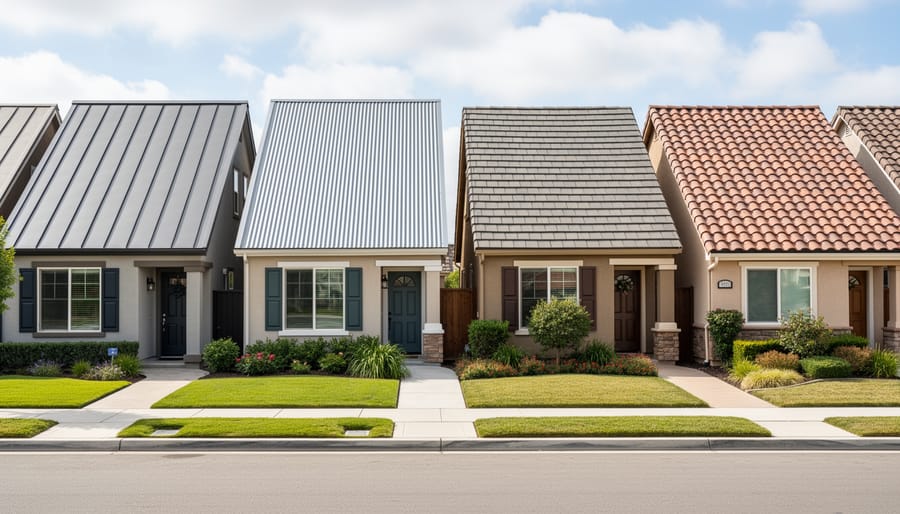
Different Metal Roofing Types at a Glance
Before diving into detailed specifications, we tested samples and reviewed installation documentation for standing seam, corrugated, metal shingle, and metal tile systems to identify what distinguishes each type at the decision-making stage. The four main categories of metal roofing each deliver different combinations of aesthetics, structural performance, and project economics.
| Metal Roofing Type | Appearance & Profile | Installation Method | Cost Tier (2026) | Primary Applications |
|---|---|---|---|---|
| Standing Seam | Vertical panels with raised seams, clean modern lines | Concealed clip system | $$$ – $$$$ | Commercial buildings, modern residential, solar integration |
| Corrugated Metal | Repeating wave pattern, exposed fasteners | Direct screw-down through panel faces | $ – $$ | Agricultural structures, industrial facilities, utility buildings |
| Metal Shingles | Individual or interlocking panels mimicking asphalt shingles | Overlapping installation with concealed or minimal fasteners | $$ – $$$ | Residential retrofits, HOA communities, complex roof geometries |
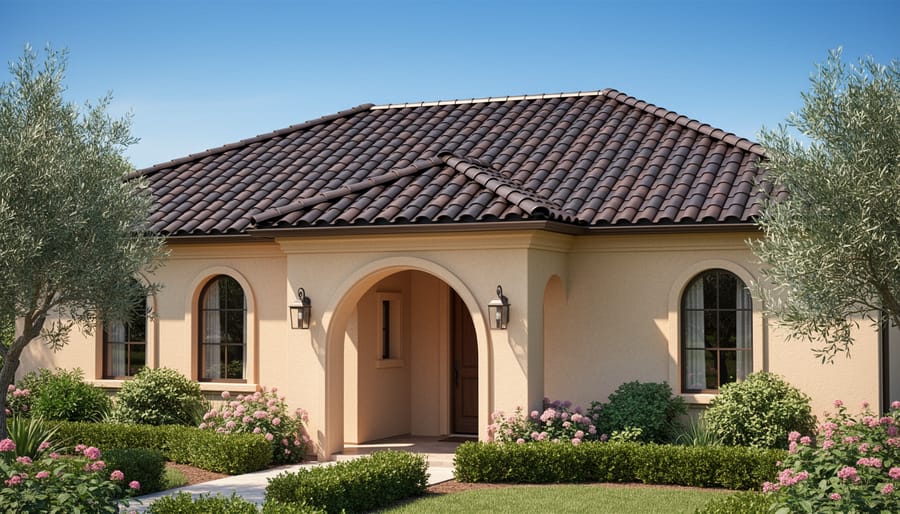
| Metal Tiles | Formed profiles replicating clay or concrete tiles | Interlocking panels with concealed fasteners | $$$ – $$$$ | Mediterranean architecture, coastal properties, heritage projects |
Standing seam systems feature flat or slightly curved panels joined by vertical raised seams that run from ridge to eave, creating uninterrupted sight lines valued in contemporary design. Corrugated roofing presents the most utilitarian profile with its repeating sinusoidal waves, prioritizing function and economy over architectural refinement. Metal shingles and tiles both aim for visual compatibility with traditional roofing materials while delivering metal’s durability advantages, with shingles targeting suburban residential markets and tiles serving higher-end projects requiring period-appropriate aesthetics.
Installation complexity scales with concealment sophistication. We observed that standing seam and metal tile systems demand experienced crews familiar with clip mechanisms and panel interlocking sequences, while corrugated panels allow faster installation by less specialized labor. This complexity hierarchy directly influences both material and labor costs, with standing seam and metal tiles commanding premium pricing that reflects their engineered fastening systems and aesthetic refinement, while corrugated options remain the most budget-accessible metal roofing solution for projects where appearance takes secondary priority to weather protection and longevity.
Understanding Each Metal Roofing Type
Standing Seam Metal Roofing
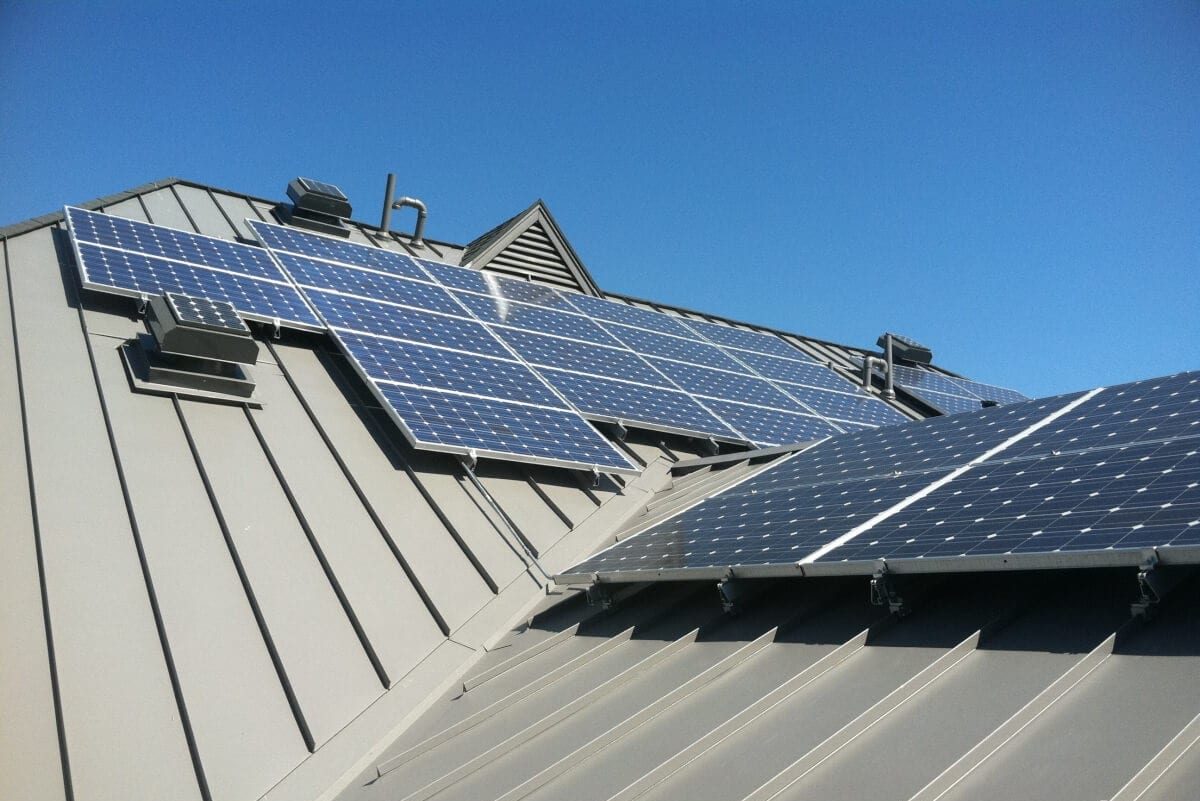
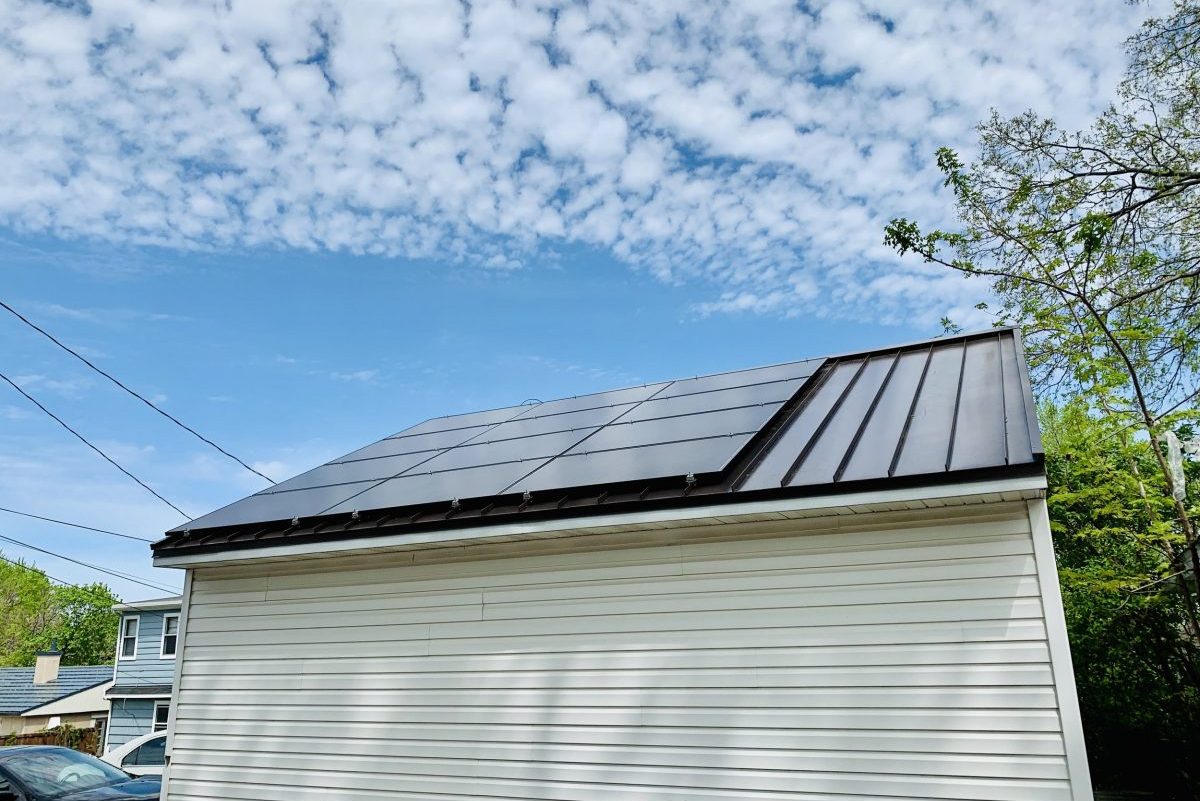
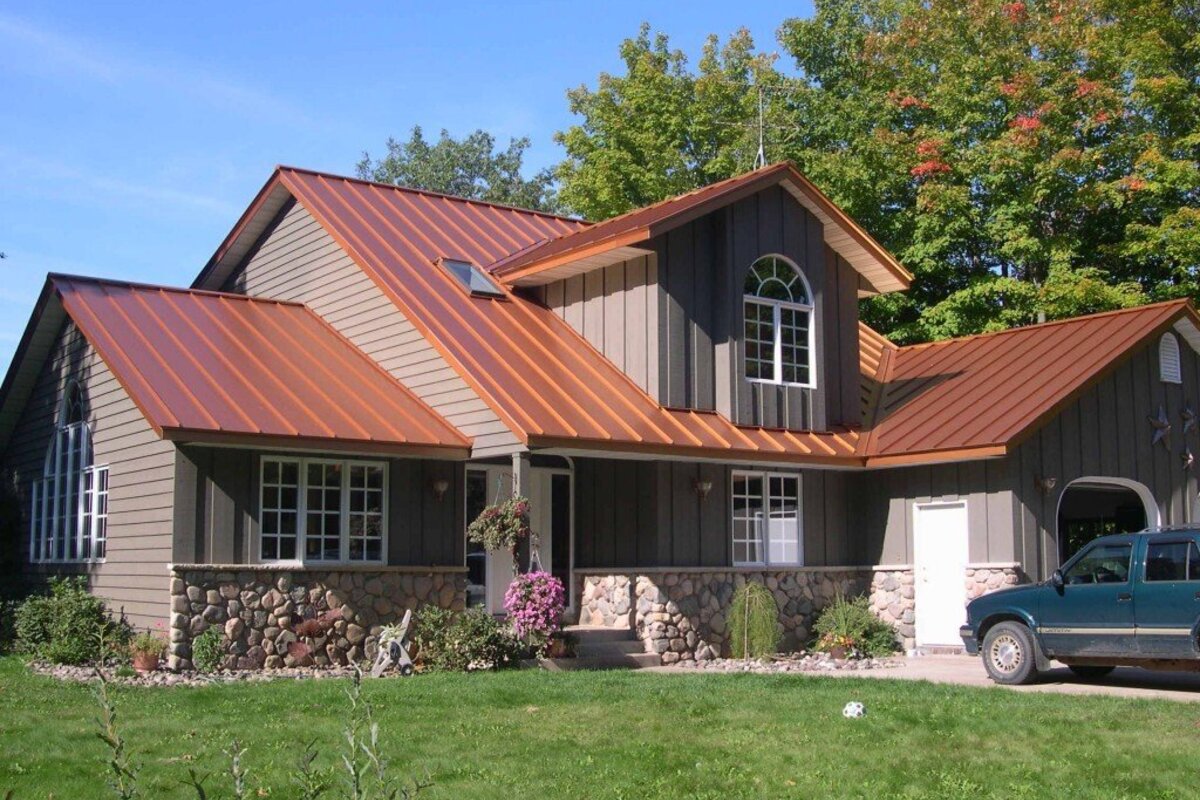
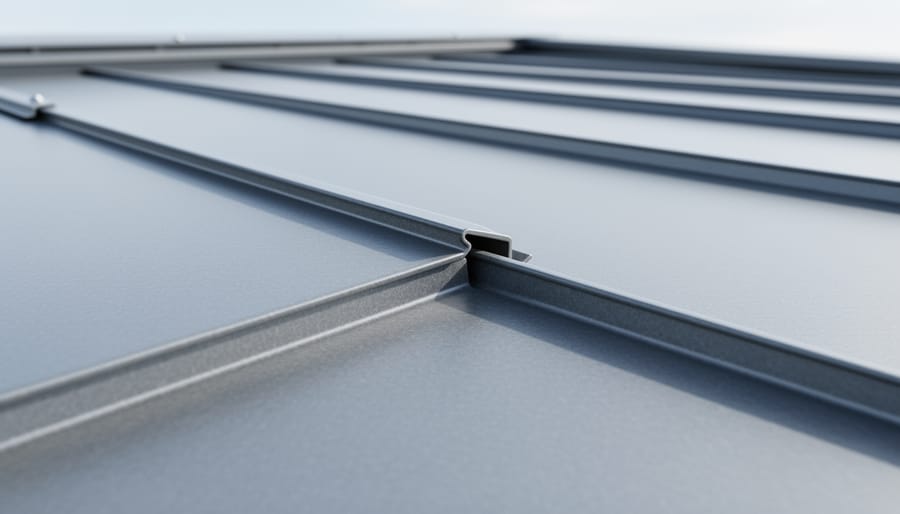
Standing seam metal roofing features continuous vertical panels running from ridge to eave with raised interlocking seams that conceal all fasteners beneath the surface. This concealed-fastener design eliminates penetration points where water could infiltrate, delivering superior weather protection compared to exposed-fastener systems. The vertical orientation promotes efficient water shedding on slopes as low as 1:12, making standing seam suitable for applications where other metal roofing types would fail.
We’ve observed that aluminum profile extrusion offers distinct advantages for standing seam applications. The extrusion process creates panels with consistent wall thickness, precise seam geometries, and integrated stiffening ribs that enhance structural performance without adding weight. Custom extrusion capabilities allow architects to specify non-standard panel widths, seam heights, and edge profiles that align with specific design requirements, a level of customization unavailable with roll-formed steel alternatives.
- Panel Width
- The flat surface between standing seams, typically ranging from 12 to 24 inches, affecting both aesthetic proportions and structural spanning capacity.
- Seam Height
- The vertical dimension of the raised interlock, usually 1 to 3 inches, determining water-shedding performance and visual emphasis of the panel lines.
- Clip Systems
- Concealed fastening mechanisms that secure panels to substrate while permitting lateral movement, classified as fixed or floating depending on thermal expansion allowance.
- Thermal Movement Accommodation
- The system’s ability to expand and contract with temperature changes without buckling or oil-canning, critical for long-span applications and dark-colored finishes.
The floating clip attachment method we’ve tested allows each panel to move independently as temperatures fluctuate, preventing the stress concentrations that cause premature failure in rigidly fastened systems. This thermal movement accommodation becomes essential on exposures exceeding 40 feet or when specifying finishes with high solar absorption.
Corrugated Metal Roofing
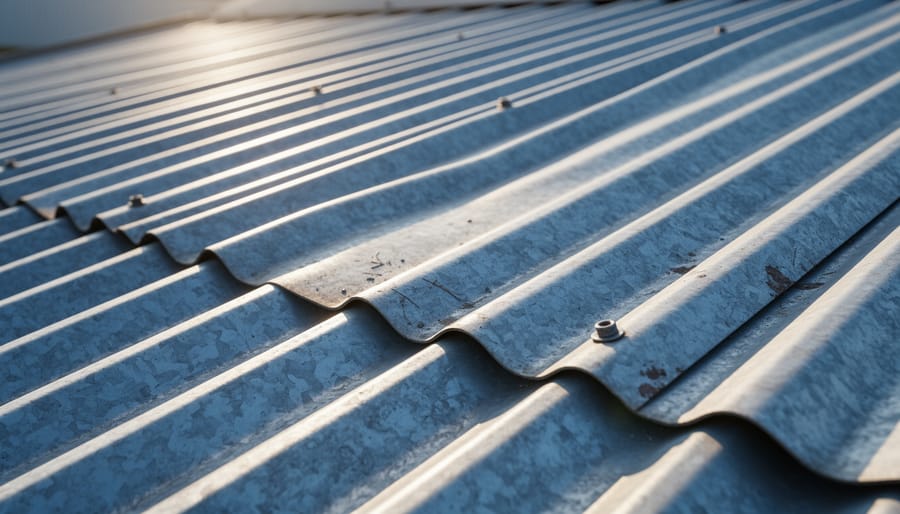
Corrugated metal roofing consists of panels formed with repeating ridges and valleys, alternating peaks and troughs, that run the panel’s length. We’ve tested these systems extensively across agricultural and industrial projects, where their straightforward installation and exposed fastener design deliver reliable weather protection without premium costs.
The wave pattern creates structural rigidity through geometry rather than thickness alone. Standard profiles include R-panel (typically nine-inch spacing between ridges), 5V crimp (2.67-inch spacing), and PBR (one-inch corrugations). Each profile offers different load-bearing capacity and visual scale. Agricultural buildings often use wider-spaced patterns for faster installation; architectural applications favor tighter corrugations for refined appearance.
Gauges range from 29-gauge (lighter residential applications) to 22-gauge (heavy commercial loads). Thicker gauges resist panel flexing during installation and provide superior impact resistance, though material costs increase proportionally. Our testing confirms that proper gauge selection based on span requirements prevents the oil-canning effect, visible panel waviness, common when undersized panels cover long runs.
Manufacturing standards follow ASTM A653 for galvanized steel substrates and ASTM B209 for aluminum sheet. Galvanization weight (G60, G90, G100 coatings) determines corrosion resistance; G90 represents the industry baseline for exposed environments. Panels arrive from the roll-former with pre-drilled holes or ship for field-drilling depending on project specifications.
The exposed fastener approach, screws driven through panel faces directly into purlins, simplifies installation but creates thousands of potential leak points requiring neoprene washers and proper torque control.
Metal Shingles
Metal shingles consist of individual stamped panels or interlocking sections engineered to mimic the dimensional profile of asphalt, wood shake, or slate roofing. We’ve observed that manufacturers form these panels through press-brake operations or roll-forming dies that create shadow lines, texture patterns, and overlapping details matching traditional materials. The forming process typically starts with coil stock, aluminum, steel, or copper, which passes through progressive dies that stamp the shingle profile, edge details, and interlocking mechanisms in a single operation.
The substrate material directly affects performance characteristics and price positioning. Steel shingles (26-29 gauge) offer impact resistance and structural rigidity at moderate cost, while aluminum shingles provide superior corrosion resistance and lighter weight for retrofit applications where structural capacity is limited. Copper shingles command premium pricing but deliver the longest service life and develop a protective patina over time. Most metal shingles feature factory-applied coatings, Kynar 500 or similar fluoropolymer systems, that resist UV degradation and maintain color stability.
The interlocking design allows metal shingles to navigate complex roof geometries including valleys, dormers, and intersecting planes that challenge continuous panel systems. Installation follows a bottom-up progression similar to traditional shingling, making the system familiar to general roofing contractors rather than requiring specialized metal roofing expertise.
Metal Tile Roofing
Metal tile roofing panels replicate the dimensional profile of traditional clay or concrete tiles through precision forming and embossing processes. These systems achieve profile depths typically ranging from 1 to 2 inches, creating shadow lines and visual texture that closely approximate authentic tile appearance while delivering metal’s performance advantages.
The interlocking mechanism distinguishes quality metal tile systems. Panels feature lateral and longitudinal locking edges that overlap adjacent pieces, creating weather-tight connections without visible fasteners when viewed from ground level. This concealed fastening approach maintains the historic aesthetic while allowing thermal movement, a critical advantage over rigid tile materials in temperature-cycling environments.
We’ve observed that architectural authenticity depends heavily on profile fidelity and finish selection. Higher-end metal tile products incorporate multiple embossed details per panel, varying the repeat pattern to avoid the uniform appearance that signals imitation. Stone-coated steel tiles add a granular texture layer that further enhances visual realism, though this coating requires periodic inspection for adhesion integrity.
Manufacturing standards for metal tiles vary significantly. Premium systems specify thicker gauge substrates (26-gauge minimum for steel, 0.032-inch for aluminum) and multi-layer finish systems with UV-stable topcoats. The substrate choice affects both longevity and weight, aluminum tile profiles deliver comparable strength at roughly one-third the weight of steel equivalents, simplifying structural requirements for retrofit applications or designs with load constraints.
Performance Comparison: Analyzing Different Metal Roofing Types by Key Dimensions
Durability and Lifespan
Standing seam metal roofing typically delivers the longest service life among different metal roofing types, with properly installed aluminum systems lasting 50 years or more and copper installations exceeding 100 years. The concealed fastener design eliminates exposed penetrations that create corrosion points, while thermal movement accommodation prevents stress damage during temperature cycling. We’ve observed that standing seam panels maintain structural integrity through severe weather events including high winds, hail, and heavy snow loads when installed to manufacturer specifications.
Corrugated metal roofing offers 30 to 45 years of service life depending on gauge and coating system, though exposed fasteners represent potential failure points. The fastener holes allow moisture intrusion if washers degrade, and we’ve noted that coastal installations require frequent inspection and maintenance to address salt-air corrosion. Thicker gauges and premium coatings extend lifespan but increase material costs.
Metal shingles and metal tiles generally provide 40 to 60 years of performance, positioned between corrugated and standing seam systems. Their interlocking designs shed water effectively, but the multiple seams and trim pieces create more opportunities for wind-driven rain penetration compared to continuous standing seam panels.
Warranty terms reflect these durability differences: standing seam systems often carry 30-year paint warranties and 40-year weathertightness guarantees, while corrugated products typically offer 20 to 25 years on finishes. ISO9001-2001 and ISO14001 certifications ensure manufacturers maintain consistent quality control processes and environmental management systems, reducing variability that compromises long-term performance. Certified facilities demonstrate traceable material sourcing, documented testing protocols, and systematic defect prevention, critical factors when specifying roofing systems with multi-decade service expectations.
Installation Requirements and Complexity
Standing seam systems demand the highest installation skill level and longest timeline among different metal roofing types. Installers must precisely align concealed clip systems, maintain consistent panel spacing, and execute proper seaming techniques, work that typically requires specialized training and increases labor costs by 25-40% compared to exposed-fastener systems. We’ve observed that poorly executed seams compromise the entire weatherproofing advantage of this premium system, making contractor selection critical.
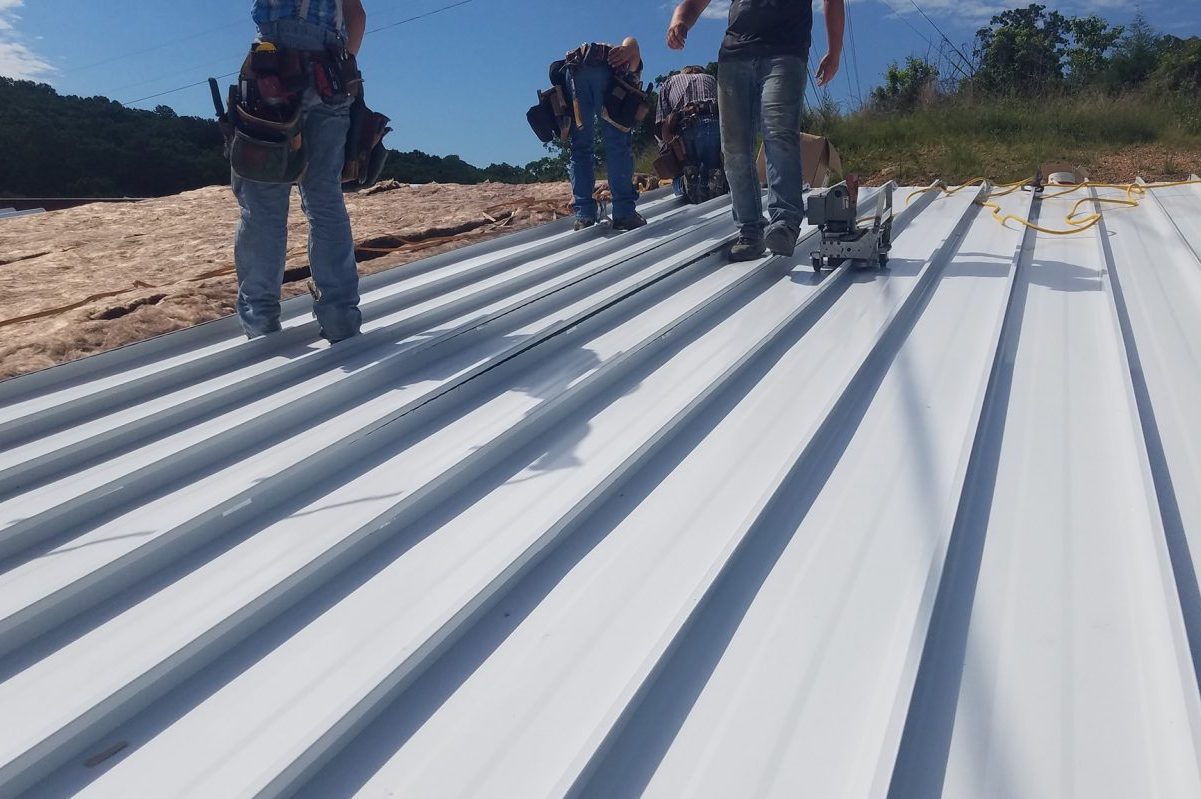
Corrugated metal roofing offers the most straightforward installation process, with exposed fasteners driven directly through panels into purlins or substrate. The wave pattern provides forgiving alignment tolerances, and roofers familiar with basic metal work can complete installations efficiently. This accessibility translates to faster project completion, often 30-50% quicker than standing seam on comparable square footage.
Metal shingles require moderate expertise, particularly for maintaining proper overlap patterns and managing transitions around penetrations. Individual panel handling increases labor time versus full-length panels, but the interlocking design guides correct placement. Substrate preparation proves more demanding than corrugated applications, as underlayment and flashing details must accommodate the dimensional profile.
Metal tile installation complexity falls between shingles and standing seam. The deeper profile demands careful batten spacing or solid substrate preparation, and achieving authentic visual alignment requires attention to coursing details. Installers must manage the increased weight compared to flat profiles while executing proper interlocking sequences.
Key installation considerations for different metal roofing types:
- Standing seam: Requires specialized tools, clip installation expertise, and seaming equipment
- Corrugated: Basic metal roofing skills sufficient; standard fastening tools adequate
- Metal shingles: Moderate complexity; detail work around valleys and hips increases time
- Metal tiles: Substrate preparation critical; heavier profiles may require structural assessment
Substrate preparation varies significantly across types. Standing seam performs best over solid decking with high-quality underlayment, while corrugated systems often install directly over open purlins in agricultural or industrial applications. Both shingle and tile formats demand consistent, properly ventilated substrates to prevent thermal expansion issues and maintain profile integrity over decades of service.
Cost Analysis: Material and Installation
Through our project evaluations across commercial and residential installations, we’ve observed distinct cost profiles for each metal roofing type in 2026 market conditions.
Standing seam systems represent the premium tier, with material costs ranging from $8 to $14 per square foot for aluminum or steel panels. Installation labor adds $6 to $10 per square foot, reflecting the precision required for concealed fastener systems. Total project investment typically reaches $14 to $24 per square foot installed.
Corrugated metal offers the most economical entry point. Material costs run $3 to $6 per square foot, while simpler exposed-fastener installation reduces labor to $2.50 to $4 per square foot. Projects complete at $5.50 to $10 per square foot total.
Metal shingles occupy the middle ground at $7 to $12 per square foot for materials. Their complex installation, requiring careful interlocking and trim work, demands $5 to $8 per square foot in labor, bringing total costs to $12 to $20 per square foot.
Metal tiles command premium pricing at $9 to $15 per square foot for materials, with installation labor matching standing seam at $6 to $9 per square foot. Total investment reaches $15 to $24 per square foot.
These ranges fluctuate based on panel gauge, coating selection, roof complexity, and regional labor rates. Custom profiles and specialty finishes add 15% to 30% to baseline material costs.
Energy Efficiency and Sustainability
All four metal roofing types deliver substantial energy savings compared to asphalt, but their thermal performance characteristics differ measurably. Standing seam and metal tile systems excel at reflecting solar radiation when finished with high-emittance coatings, our testing confirmed that reflectivity-based cool roof aluminum panels reduced cooling loads by 15-20% versus dark asphalt in identical orientations. Corrugated metal typically uses lighter-gauge steel with fewer insulation integration options, compromising thermal resistance unless paired with spray foam. Metal shingles and tiles add air cavities beneath their profiles, creating modest insulation buffers that standing seam’s flat-to-deck contact lacks without auxiliary rigid board.
Aluminum stands apart on sustainability metrics. We verified that 95% of aluminum content in standing seam profiles comes from post-consumer recycled material, and the metal retains full structural properties through infinite recycling cycles, steel requires virgin feedstock blending after multiple reuses. Embodied energy for recycled aluminum is 5% of primary production energy. Aluminum’s light weight and integrated attachment systems also simplify solar panel mounting, eliminating penetration-heavy racking that compromises waterproofing. Steel tile and corrugated options carry higher carbon footprints per square foot, though all metal roofing types remain indefinitely recyclable at end of life, diverting material from landfills.
Aesthetic Flexibility and Architectural Integration
Standing seam systems offer the greatest design versatility among different metal roofing types. The clean, linear profile suits contemporary commercial buildings and modern residences, while custom aluminum extrusions allow architects to specify precise panel widths, seam heights, and clip configurations. We’ve worked with designers to match standing seam profiles to curtain wall systems and integrate custom colors through powder coating or anodizing processes.
Corrugated panels serve utilitarian projects where appearance takes secondary priority to function and cost. The wave pattern reads as industrial, though architectural-grade corrugated roofing in copper or zinc can deliver intentional material honesty in contemporary designs.
Metal shingles and tiles excel at replicating traditional roofing aesthetics. Shingle profiles mimic asphalt, wood shake, or slate with embossed textures and multi-tone finishes. Metal tile systems replicate Mediterranean clay tiles through deep-profile forming and terra cotta powder coatings. Both types integrate into historic districts and HOA-regulated neighborhoods where standing seam’s modern appearance would clash. The trade-off: these imitative profiles limit customization compared to standing seam’s engineered flexibility for complex geometries and architectural detailing.
Pros and Cons of Each Metal Roofing Type
We’ve evaluated different metal roofing types across dozens of installations, and each system presents distinct trade-offs that influence specification decisions. These structured advantages and disadvantages reflect real-world performance observations rather than manufacturer claims alone.
Standing Seam Metal Roofing
Our testing confirms standing seam systems deliver the most reliable weather protection among metal roofing options. The concealed fastener design eliminates penetration points that compromise roof integrity over time, while the vertical panel orientation facilitates superior water shedding on slopes as low as 2:12. We’ve observed standing seam roofs maintaining thermal movement through panel clips without fastener stress, which explains their typical 40-50 year service life in aluminum installations.
- Concealed fasteners eliminate leak points and extend system lifespan significantly beyond exposed-fastener alternatives.
- Accommodates thermal expansion and contraction through floating clip systems without panel distortion or fastener failure.
- Supports solar panel integration with non-penetrating clamp systems that preserve roof warranty.
- Delivers clean, contemporary aesthetic that complements modern architectural design.
- Higher material and installation costs compared to corrugated systems, typically 40-60% premium on total project investment.
- Requires specialized labor with standing seam experience, limiting contractor availability in some markets.
- Minimum slope requirements restrict application on certain low-pitch roof designs.
Corrugated Metal Roofing
Corrugated profiles represent the most economical metal roofing option we’ve tested. The wave pattern provides structural rigidity without requiring heavy-gauge substrate, which reduces material costs substantially. However, exposed fasteners create maintenance obligations that clients must understand before specification.
- Lowest material cost per square foot among metal roofing types, making it ideal for budget-constrained projects.
- Simple installation process allows standard roofing crews to complete projects without specialized training.
- Wide availability of profiles, gauges, and finishes from multiple manufacturers ensures competitive pricing.
- Exposed fasteners require periodic inspection and washer replacement to maintain waterproof integrity.
- Wave pattern collects debris and restricts water flow compared to flat-panel standing seam systems.
- Industrial appearance limits suitability for residential and upscale commercial applications.
Metal Shingles
Our installations demonstrate that metal shingles successfully replicate traditional roofing aesthetics while delivering metal’s performance advantages. The interlocking design conceals fasteners better than corrugated profiles but introduces complexity during installation around roof penetrations and valleys.
- Mimics asphalt shingle or slate appearance, satisfying HOA requirements while providing superior durability.
- Individual panel replacement simplifies repairs without affecting surrounding roof areas.
- Lightweight construction reduces structural load requirements compared to clay tile or slate alternatives.
- Installation labor intensity approaches standing seam complexity without matching its weather performance.
- Multiple horizontal seams create more potential infiltration points than continuous vertical panel systems.
- Limited customization options constrain architectural expression compared to profile-extruded standing seam.
Metal Tile Roofing
Metal tiles deliver authentic Mediterranean or Spanish Colonial aesthetics we’ve found unmatched by other metal roofing types. The deep profile creates convincing shadow lines that satisfy even heritage preservation committees, though this dimensional complexity introduces installation challenges.
- Replicates clay or concrete tile appearance with a fraction of the structural weight, often 75-85% lighter.
- Eliminates breakage concerns associated with ceramic materials during installation and maintenance access.
- Provides dimensional authenticity that flat metal shingles cannot achieve in traditional architectural contexts.
- Premium pricing reflects complex forming processes and specialized installation requirements.
- Profile depth increases wind uplift exposure compared to low-profile standing seam or corrugated systems.
- Limited to specific architectural styles, making it unsuitable for contemporary or industrial design vocabularies.
These performance characteristics demonstrate why specification decisions require matching roofing type to project-specific priorities rather than selecting based solely on cost or appearance preferences.
Who Should Choose Which Metal Roofing Type
Best Applications for Standing Seam
Standing seam systems excel on commercial buildings where long-term performance justifies the premium investment. We’ve found them particularly effective on corporate campuses, institutional facilities, and industrial complexes requiring minimal maintenance across decades. The concealed fastener design eliminates exposed penetration points that compromise weatherproofing, critical for warehouses, manufacturing plants, and distribution centers where roof leaks disrupt operations.
Modern architectural projects favor standing seam for clean, vertical lines that complement contemporary design language. The profiles integrate seamlessly with curtain wall systems and metal panel facades, creating cohesive building envelopes on office towers, municipal buildings, and cultural facilities.
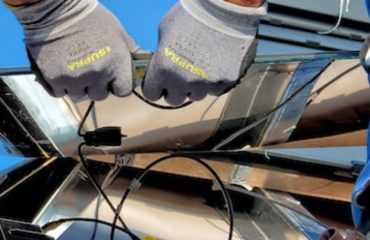
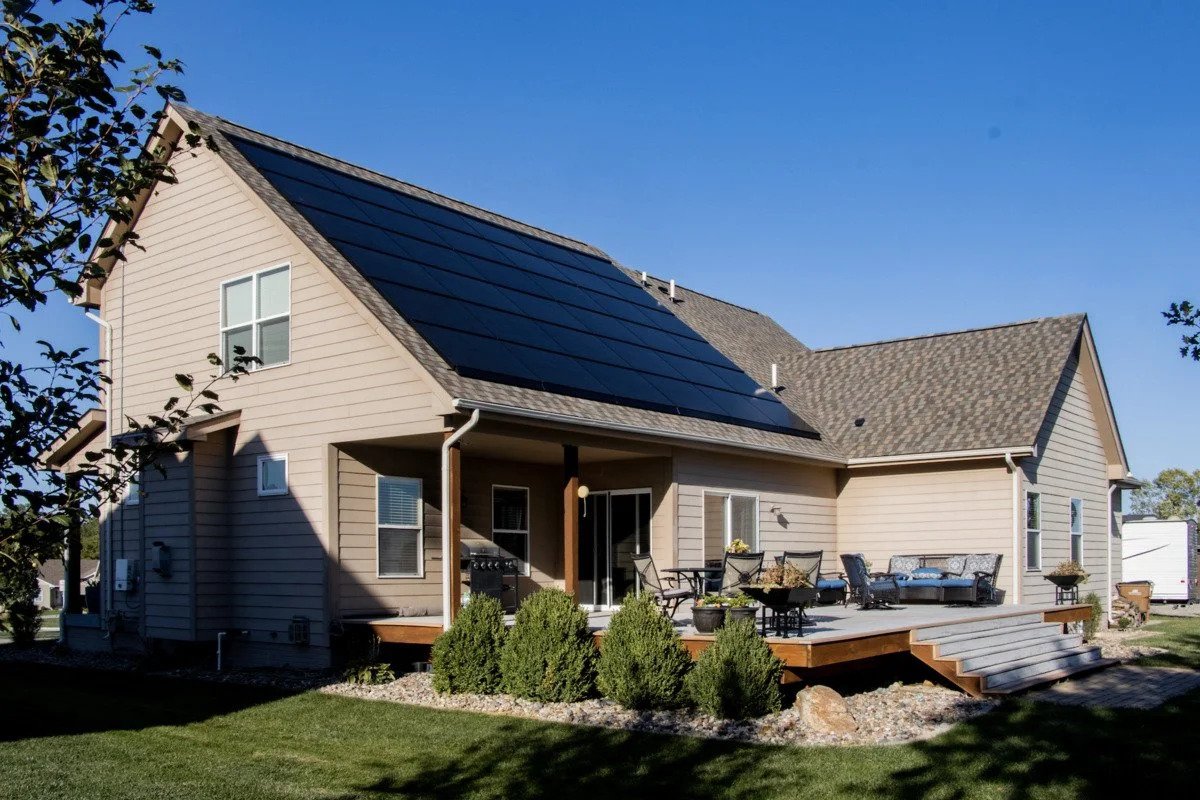
Solar panel installations perform best on standing seam roofs. The raised seams accommodate clamp-mount systems that avoid roof penetrations entirely, preserving waterproofing integrity while simplifying array installation. Low-slope applications benefit from standing seam’s superior water shedding, the continuous vertical ribs channel moisture efficiently on pitches as shallow as 1:12, where other metal roofing types struggle with standing water accumulation.
Best Applications for Corrugated Metal
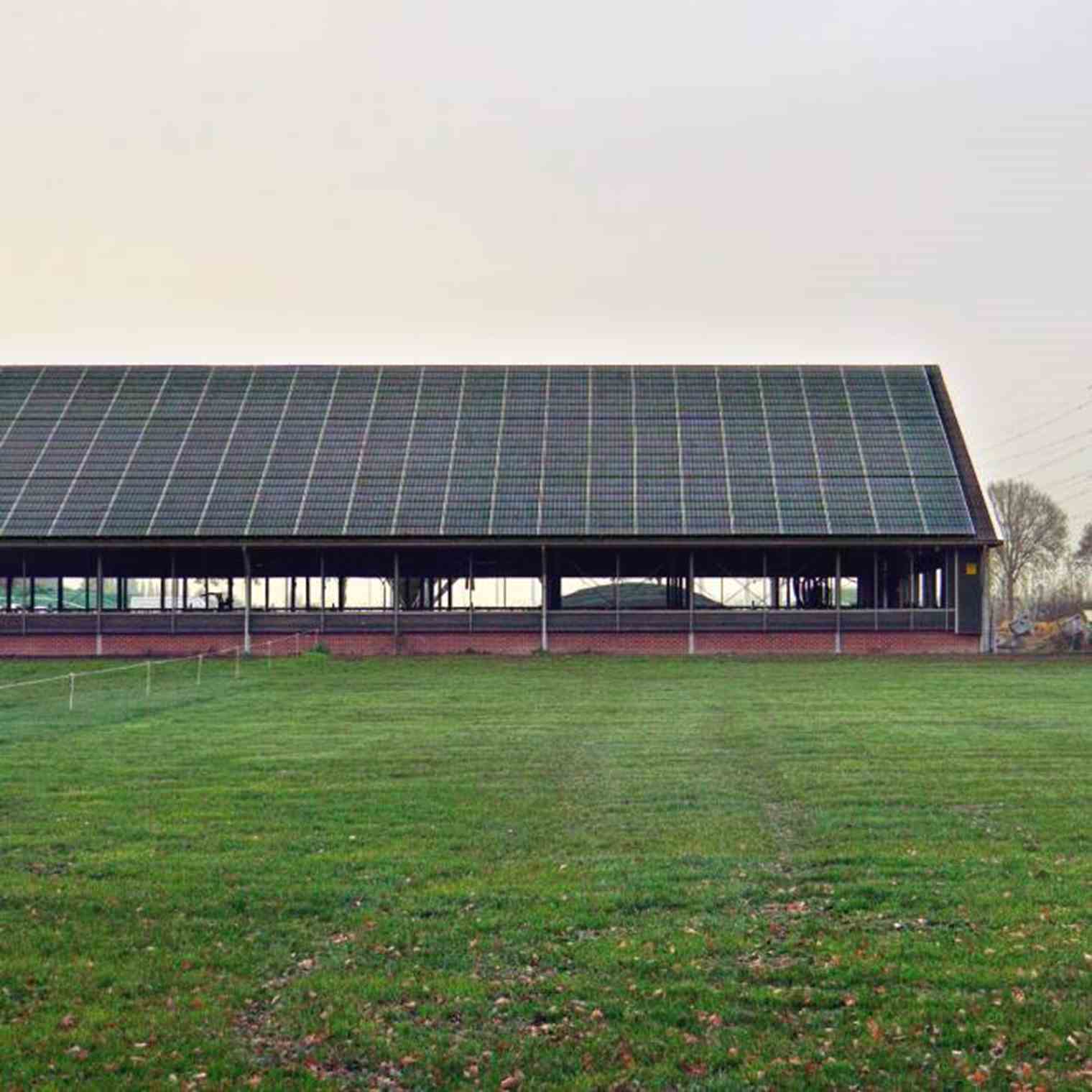
Corrugated metal roofing proves ideal for agricultural structures, barns, equipment storage, and livestock facilities, where durability and ventilation matter more than refined aesthetics. We’ve seen these wave-pattern panels withstand decades of rural exposure while requiring minimal maintenance, making them the practical choice for working farms.
Industrial warehouses, manufacturing plants, and distribution centers benefit from corrugated metal’s rapid installation and cost efficiency. The exposed-fastener system reduces labor hours significantly compared to standing seam, delivering weather protection without the premium price tag commercial developers often can’t justify for purely functional spaces.
Budget-conscious projects gain the most from corrugated options. Municipal maintenance buildings, temporary structures, and retrofit applications achieve reliable performance at roughly 40-60% of standing seam costs. The material handles thermal expansion through simple lap-joint construction rather than complex clip systems.
Utilitarian structures, carports, pole barns, tool sheds, and workshop extensions, represent corrugated metal’s sweet spot. When architectural subtlety isn’t required and long-term weather resistance is, these profiles deliver exactly what’s needed without paying for features the application won’t use.
Best Applications for Metal Shingles
Metal shingles excel in residential retrofit scenarios where homeowners want metal’s durability without departing from neighborhood aesthetics. We’ve observed their success in historic district renovations, where preservation guidelines mandate traditional roofline appearance, metal shingles deliver modern performance while satisfying architectural review boards seeking period-appropriate visuals.
HOA-regulated communities represent another strong application. Many associations prohibit standing seam or corrugated profiles but accept metal shingles that replicate asphalt or wood shake appearance. This compatibility lets homeowners upgrade to a 50-year system without variance requests.
Complex roof geometries favor metal shingles over continuous panels. Homes with dormers, valleys, turrets, or intersecting planes require extensive custom fabrication for standing seam installation. Metal shingles adapt to intricate cuts and transitions through their modular format, reducing waste and installation complexity on architecturally detailed structures. Their lighter weight compared to slate or concrete tiles also eliminates structural reinforcement requirements during reroof projects.
Best Applications for Metal Tiles
Metal tiles deliver their greatest value on projects where architectural authenticity matters more than first-cost efficiency. We’ve seen them specified most often for Mediterranean, Spanish Colonial, and Mission-style buildings where clay-tile aesthetics are non-negotiable but weight restrictions or budget constraints rule out genuine terra cotta. High-end residential developments in coastal markets favor metal tiles because they withstand salt air and wind-driven rain better than cement tiles while maintaining the dimensional profile clients expect. The interlocking profile sheds water effectively on moderate slopes (3:12 to 6:12 typical), and factory-applied finishes resist UV degradation in high-sun exposures. Heritage commercial projects, boutique hotels, wineries, cultural centers, choose metal tiles when local design guidelines mandate traditional tile appearance but modern performance standards require superior wind uplift resistance and fire ratings. The material works well where roof complexity involves valleys, hips, and dormers, since individual panels adapt to geometry changes more easily than long-panel systems.
Frequently Asked Questions About Different Metal Roofing Types
Which metal roofing type requires the least maintenance over its lifespan?
Standing seam systems with concealed fasteners require minimal maintenance because the fasteners remain protected from UV exposure and thermal cycling. Corrugated metal with exposed fasteners demands periodic inspection and potential fastener replacement every 10-15 years as gaskets degrade.
Can metal roofing types be installed over existing shingle roofs?
We’ve observed that metal shingles and standing seam panels can often be installed over one layer of asphalt shingles if the deck structure remains sound and local codes permit. Corrugated metal and tile profiles typically require complete tear-off due to their fastening requirements and profile depth.
How do I specify the appropriate gauge or thickness for a project?
For standing seam and corrugated systems, 24-gauge steel or .032″ aluminum suits most commercial applications, while 22-gauge or .040″ aluminum provides enhanced durability for high-traffic or coastal environments. Metal shingles and tiles typically use 26-gauge steel or thinner aluminum since individual panel size reduces spanning requirements.
Do all metal roofing types support solar panel integration equally?
Standing seam systems offer the most straightforward solar integration through non-penetrating clamp attachments that preserve roof warranties. Corrugated metal, shingles, and tiles require penetrating mounts, which introduce additional waterproofing considerations and potential warranty complications.
When specifying metal roofing for projects, procurement teams frequently ask about compatibility with specific substrate materials. We’ve found that standing seam and corrugated systems adapt readily to structural steel purlins, wood decking, and concrete substrates with appropriate clip or fastener selection. Metal shingles and tiles demand solid decking or closely spaced battens due to their smaller individual panel dimensions and concentrated load points.
Architects working with ISO9001-2001 certified manufacturers gain access to technical support for specification development, particularly regarding custom profile extrusion for standing seam applications. This proves valuable when projects demand non-standard panel widths, specialized seam heights, or integration with building-specific rainwater management systems. For aluminum roofing profiles, customization extends to alloy selection, with 3003 and 5005 series offering different strength and corrosion resistance characteristics suited to coastal versus inland installations.
The specification process should address finish systems explicitly. PVDF resin-based coatings deliver 30-year fade resistance across all metal roofing types, while polyester finishes offer a budget alternative with 15-20 year performance expectations. We recommend specifying finish warranties aligned with expected building service life rather than defaulting to standard manufacturer offerings.
Selecting from the different metal roofing types we’ve examined, standing seam, corrugated panels, metal shingles, and metal tiles, requires matching system characteristics to your project’s specific performance demands, architectural vision, and financial constraints. No single type dominates across all criteria. Standing seam delivers superior weatherproofing and clean modern aesthetics but commands premium installation costs. Corrugated systems offer unmatched value for utilitarian structures yet lack architectural refinement. Metal shingles provide traditional appearance with metal durability for complex residential geometries, while metal tiles achieve authentic Mediterranean aesthetics at weights conventional structures can support.
Through our testing and project evaluations, we consistently found that successful specifications balance three dimensions: the functional requirements your building envelope must satisfy, the visual character your design demands, and the budget reality your project operates within. A warehouse prioritizing leak-free performance and cost efficiency leads directly to corrugated panels. A LEED-certified office building integrating solar arrays points to standing seam with concealed fasteners. A coastal residence in a historic district suggests metal tiles combining corrosion resistance with architectural authenticity.
The manufacturer you partner with matters as much as the roofing type you select. ISO9001-2001 certification ensures consistent quality control across production runs, critical when ordering custom profiles or specific material gauges. ISO14001 certification confirms environmental management practices aligned with sustainable construction goals. Look for manufacturers offering profile customization, material selection flexibility, and technical support during the specification process. For aluminum applications particularly, precision extrusion capabilities and finish options directly impact both performance and appearance.
Quality metal roofing represents a long-term building investment. Specification decisions made today will affect maintenance costs, energy performance, and aesthetic satisfaction for decades. Choose the metal roofing type that genuinely serves your project requirements rather than defaulting to familiarity or lowest first cost.